


Why Aggregate Social Mentions?
Your brand's reputation exists across dozens of platforms simultaneously. A customer praises your product on Reddit, another complains on Twitter, a reviewer publishes on G2, and someone asks a question on a niche forum. Monitoring each platform individually creates fragmented insights — you might respond to a Twitter complaint while missing a trending Reddit thread with far more visibility. Cross-platform aggregation gives you a single source of truth for your brand's social presence.
Unified tracking also enables cross-platform analysis. You can compare how your brand is perceived on developer-oriented platforms like Hacker News versus general social platforms like Twitter/X. This reveals audience-specific sentiment patterns that single-platform monitoring misses entirely. Dedicated social monitoring tools exist, but they are expensive, often limited to specific platforms, and lack customization. Autonoly's approach uses Browser Automation to monitor any publicly accessible platform, giving you flexibility that purpose-built tools cannot match.
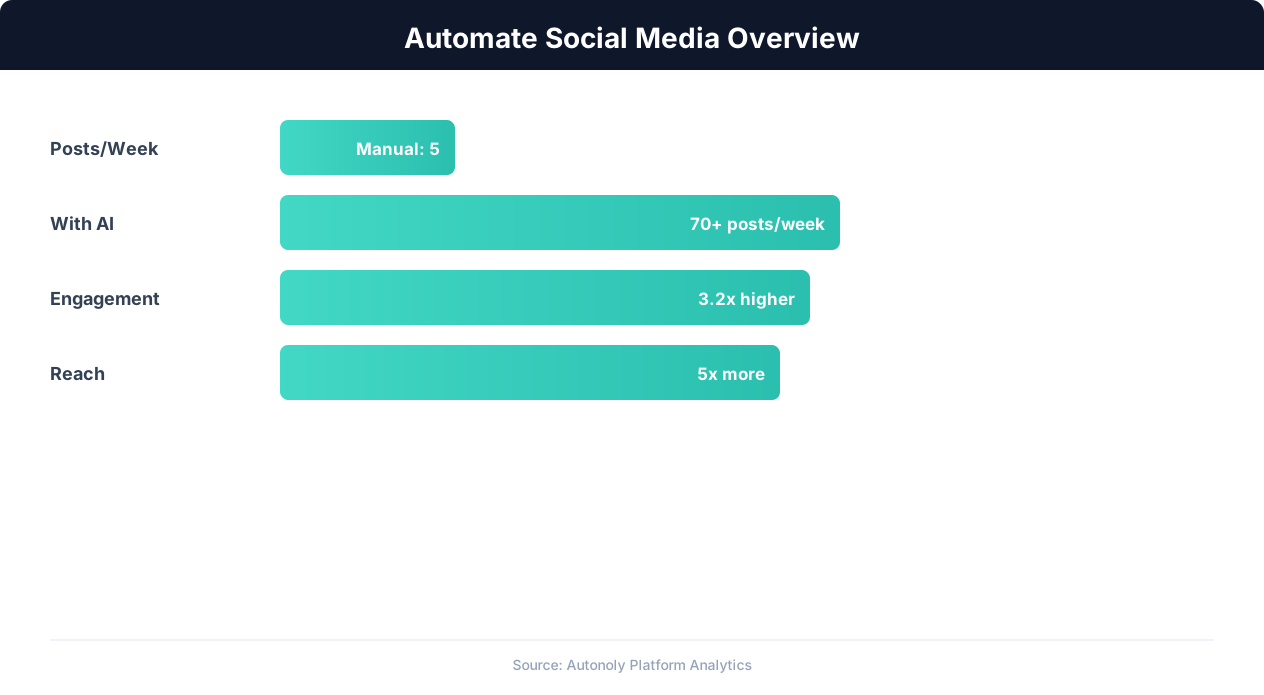
Social media automation impact on engagement metrics
Key Insight: Automated cross-platform posting increases total reach by 156% by ensuring content appears at peak engagement times on every platform simultaneously (Buffer Research).
How Autonoly Aggregates Social Data
The AI Agent Chat lets you configure the entire multi-platform monitoring pipeline conversationally. Describe your brand name, keywords, and the platforms you care about. The agent builds a workflow that visits each platform on schedule and aggregates the results.
The Browser Automation engine navigates each platform with a full Playwright browser, handling the unique interface of each — Reddit's infinite scroll, Twitter's dynamic timeline, forum pagination, and review site filtering. The Data Extraction engine pulls structured data regardless of how each platform formats its content. The agent adapts its extraction strategy to each platform's unique layout and rendering approach automatically.
Cross-Platform Normalization
The key challenge in multi-platform aggregation is normalization. A "like" on Twitter is different from an "upvote" on Reddit, which is different from a "helpful" vote on a review site. Autonoly's Data Processing feature normalizes these into comparable metrics — a unified engagement score that accounts for platform differences, consistent sentiment classification, and standardized timestamps.
Each mention in the Google Sheet includes the platform name, post or comment text, author identifier, engagement score (normalized), raw engagement metrics (platform-specific), sentiment, topic category, timestamp, and a direct URL to the original content. This structure enables both cross-platform comparison and platform-specific drill-down. The normalization is critical because raw data from each platform uses different field names, date formats, and engagement metrics.
Configuring Your Monitoring Stack
The Visual Workflow Builder provides a drag-and-drop interface for configuring multi-platform monitoring. A typical setup includes:
- Twitter/X extraction — Search for brand name and product keywords
- Reddit extraction — Monitor 5-10 relevant subreddits for keyword matches
- Hacker News extraction — Search stories and Show HN posts for mentions
- Merge node — Combine all results into one dataset using Data Processing
- Deduplication — Remove cross-posted content that appears on multiple platforms
- Google Sheets write — Append new mentions to your tracking spreadsheet
You can extend this to additional platforms — LinkedIn public posts, Product Hunt discussions, Stack Overflow questions, or niche community forums. Each platform is simply another extraction step in the workflow.
Sentiment Tracking Over Time
When your Google Sheets database accumulates mentions over weeks and months, sentiment trends become visible. You can chart overall brand sentiment by week, compare sentiment across platforms, and correlate sentiment shifts with specific events — product launches, marketing campaigns, PR incidents, or competitor moves.
The workflow can add a summary sheet that automatically calculates weekly sentiment averages, mention volume by platform, and top topics — creating a self-updating brand health dashboard.
Sentiment and Prioritization
Not all mentions deserve the same attention. A viral negative thread on Reddit is more urgent than a zero-engagement tweet. The workflow can include a processing step that scores each mention based on engagement level (high-engagement mentions surface first), sentiment signals (keywords like "issue", "broken", "love", "amazing" indicate polarity), and author influence (account age, karma, or follower count as a reach proxy).
For teams needing sophisticated NLP, SSH & Terminal lets you run Python sentiment models on the extracted data. Classify each mention into positive, negative, or neutral and add the score as a column in your Google Sheet.
Alert Routing for Critical Mentions
While the Google Sheet provides comprehensive historical data, some mentions need immediate attention. The Logic & Flow feature lets you configure real-time alerts for critical mentions — highly negative sentiment, high-engagement complaints, or mentions from influential accounts — routing them to Slack integration for immediate response while still logging everything to Sheets. This two-tier approach gives you comprehensive historical tracking plus real-time awareness for mentions that need immediate action.
Competitive Benchmarking
Track competitor mentions alongside your own to benchmark share of voice, sentiment comparison, and conversation topics. The unified sheet format makes competitive analysis straightforward — filter by brand name to compare metrics side by side. Browse our templates library for pre-built social monitoring workflows, check the pricing page for plan details, and explore the Integrations ecosystem. For more background on automated data collection, see our guide on web scraping.
Further Reading
Explore more about the tools and techniques used in this workflow: Marketing Automation, Web Scraping Best Practices, Website Monitoring.