Why Scrape LinkedIn Data?
LinkedIn is the world's largest professional network, with over 1 billion members across 200 countries. It is the primary platform for professional identity online, and the data it contains — professional profiles, company pages, job listings, and industry connections — represents one of the most valuable B2B datasets in existence. Organizations across recruiting, sales, market research, and competitive intelligence rely on LinkedIn data to make informed decisions.
Recruiting and Talent Sourcing
Recruiters spend an estimated 40-60% of their time on LinkedIn, manually searching for candidates and reviewing profiles. At scale, this manual process becomes the bottleneck in the hiring pipeline. Scraping LinkedIn profile data allows recruiting teams to build targeted candidate databases, filter by specific skills and experience, and identify passive candidates who are not actively job hunting but match ideal candidate profiles. A technology company searching for senior machine learning engineers, for example, can extract thousands of matching profiles and prioritize outreach based on experience level, current company, education, and skill endorsements.
Sales Prospecting and Lead Generation
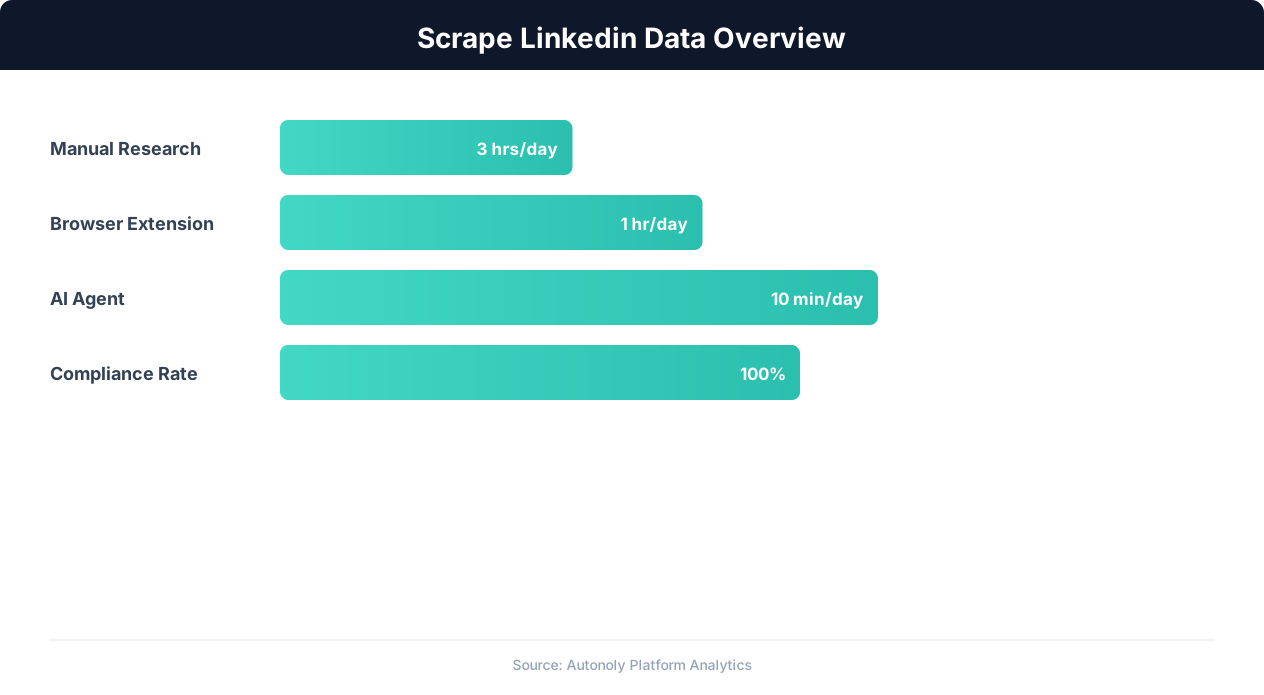
For B2B sales teams, LinkedIn is the primary source of prospect data. Sales Development Representatives (SDRs) spend hours manually building prospect lists — searching for decision-makers at target companies, copying their titles and company information, and entering the data into CRM systems. Automating this process with structured data extraction can reduce prospecting time by 70-80%, freeing sales teams to focus on outreach and relationship building rather than data entry.
Market Research and Competitive Intelligence
LinkedIn data reveals organizational patterns that are not visible through other sources. By analyzing employee profiles at a competitor, you can determine: the size of their engineering team, which technologies they use (based on employee skills), how fast they are hiring in specific departments, and which senior leaders they have recently hired. This intelligence helps companies understand competitive threats, identify market trends, and make strategic hiring decisions.
Job Market Analysis
LinkedIn job postings contain rich structured data: job title, company, location, salary range (increasingly common), required skills, experience level, and posting date. Scraping job listings at scale enables labor market researchers, HR analysts, and career coaches to identify which skills are in highest demand, which companies are hiring most aggressively, how salary ranges vary by geography and seniority, and how job requirements evolve over time.
Academic and Economic Research
Researchers use LinkedIn data to study labor mobility, skill evolution, industry trends, and economic indicators. The movement of employees between companies, the emergence of new job titles, and the geographic distribution of specific skills all represent valuable research data. LinkedIn's comprehensive professional network provides a real-time view of the labor market that traditional employment surveys lag by months.
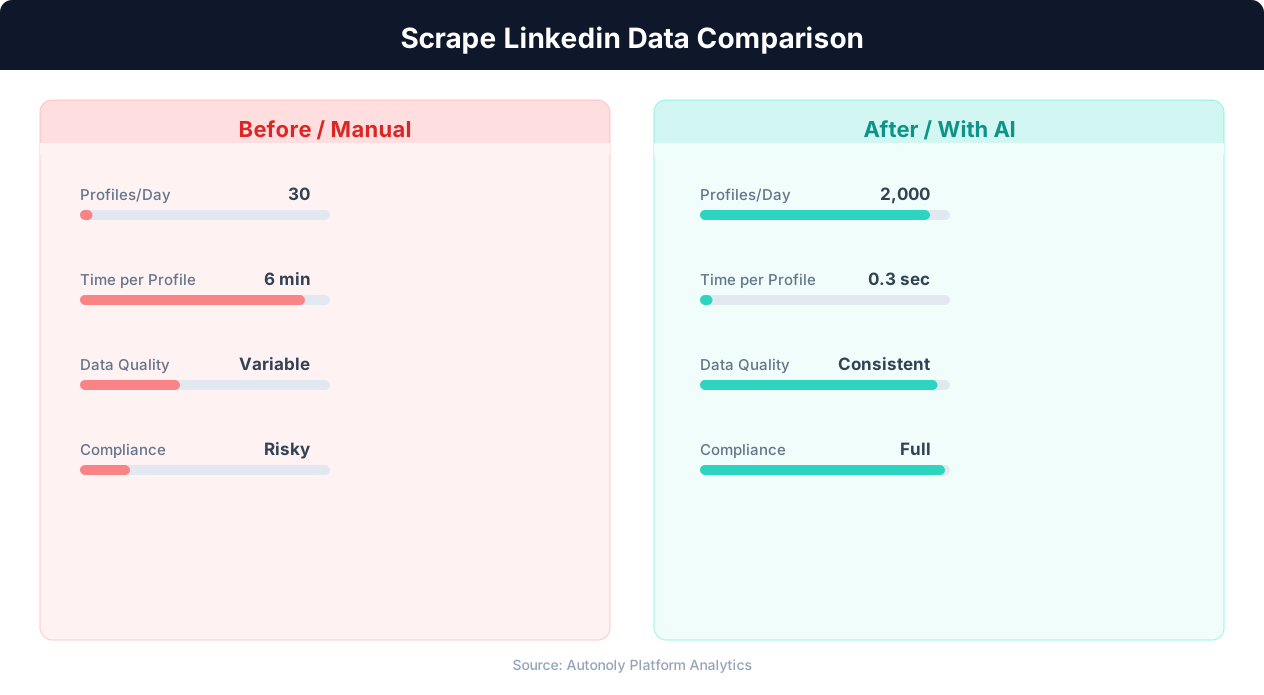
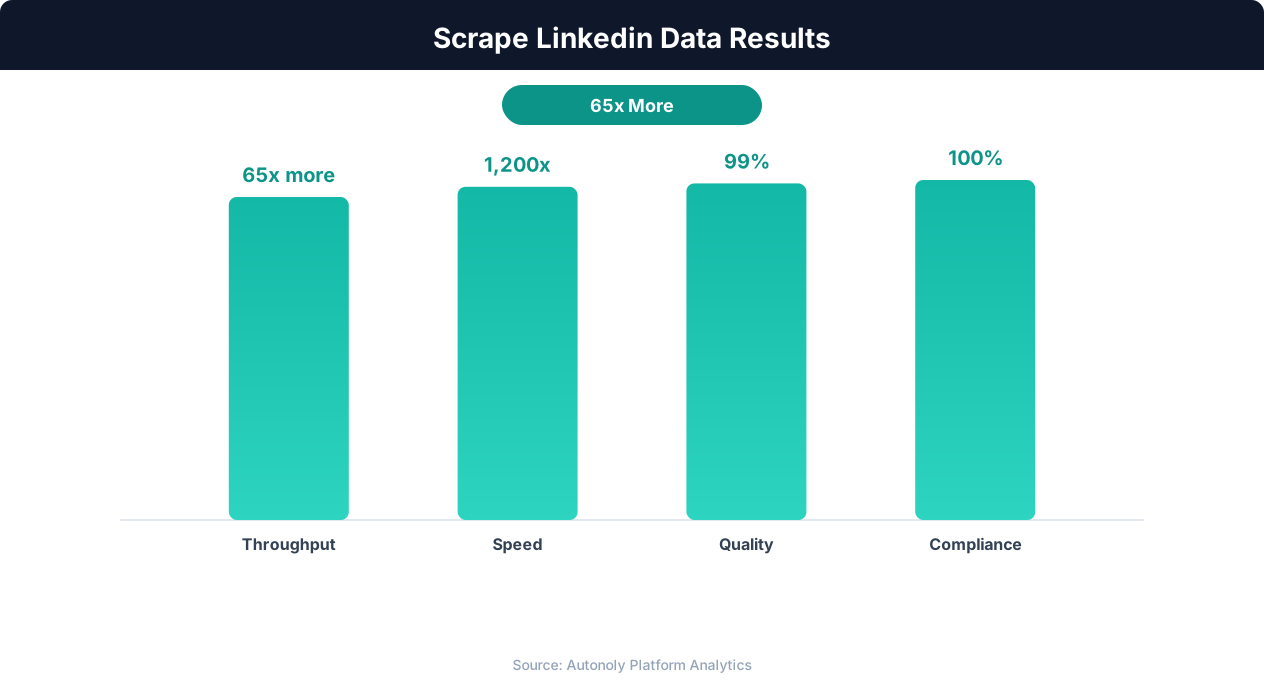
The common thread across all these use cases is volume: LinkedIn's value as a data source scales with the number of profiles or listings you can analyze. Manual browsing limits you to dozens of profiles per day; structured extraction enables analysis of thousands.
The Legal Landscape: hiQ v LinkedIn and What It Means
LinkedIn scraping is the most legally scrutinized area of web scraping, primarily because of LinkedIn's aggressive enforcement actions and the landmark hiQ Labs v. LinkedIn case. Understanding the legal landscape is not optional for LinkedIn scraping — it is foundational.
The hiQ v LinkedIn Case
In 2017, hiQ Labs, a workforce analytics company, sued LinkedIn after LinkedIn sent a cease-and-desist letter demanding that hiQ stop scraping public LinkedIn profiles. The case centered on whether scraping publicly available LinkedIn data violated the Computer Fraud and Abuse Act (CFAA).
The Ninth Circuit Court of Appeals ruled in hiQ's favor in 2022, establishing several important precedents:
- Public data is not "protected." The CFAA prohibits accessing a computer "without authorization." The court held that accessing publicly available data on a website that is open to the general public does not constitute unauthorized access, even when the website's Terms of Service prohibit scraping.
- A cease-and-desist letter does not create a CFAA violation. LinkedIn argued that its cease-and-desist letter revoked hiQ's authorization to access LinkedIn. The court disagreed, holding that a website owner cannot create a CFAA violation simply by sending a letter.
- Publicly available means no login required. The court distinguished between public LinkedIn profiles (visible to anyone on the internet) and private content (accessible only to logged-in members). The ruling applies to public data — scraping content that requires authentication remains a riskier legal proposition.
Limitations of the hiQ Ruling
The hiQ precedent has important limitations that scrapers must understand:
- Ninth Circuit only: The ruling is binding law in the Ninth Circuit (California, Oregon, Washington, and other western states) but is only persuasive authority in other circuits. Courts in other jurisdictions may reach different conclusions.
- CFAA only: The ruling addresses the CFAA specifically. LinkedIn could still pursue state law claims (trespass to chattels, breach of contract, unfair competition) that are not governed by the CFAA.
- Public profiles only: The ruling specifically applies to data that is visible without logging in. Many LinkedIn profiles are not fully public — content that requires a LinkedIn login to view is not covered by the hiQ precedent.
- Ongoing litigation: The hiQ case was remanded for further proceedings and may produce additional rulings that refine or limit the precedent.
GDPR and Privacy Regulations
Even if the act of scraping is legally permissible, the data you collect may be subject to privacy regulations. LinkedIn profiles contain personal data: names, employment history, education, skills, and sometimes contact information. Under GDPR, processing personal data of EU residents requires a lawful basis. Under CCPA, California residents have rights over their personal information. Scraping LinkedIn profiles at scale without a clear lawful basis for processing the personal data creates regulatory exposure, regardless of whether the scraping itself is permitted.
Practical Legal Framework
Based on current legal precedent and regulatory requirements, a defensible approach to LinkedIn scraping involves: only scraping publicly accessible profiles (no login required), processing data for legitimate purposes (research, analysis) rather than spam or harassment, complying with applicable privacy regulations (GDPR notice and lawful basis, CCPA opt-out), not bypassing technical access controls aggressively, and documenting your compliance efforts.
LinkedIn's Anti-Scraping Defenses
LinkedIn invests more in anti-scraping technology than virtually any other social platform. Their defenses are multi-layered, sophisticated, and continuously evolving. Understanding what you are up against is essential for any LinkedIn data extraction project.
Authentication Gates
LinkedIn's most effective defense is simple: most profile data is not visible without logging in. While LinkedIn used to display full public profiles to anonymous visitors, they have progressively restricted anonymous access. Today, an anonymous visitor sees limited information — typically the person's name, headline, and current position. Full profile data (complete work history, education, skills, connections, activity) requires a logged-in LinkedIn session.
This creates a fundamental challenge for scrapers. Logging into LinkedIn to scrape data is legally riskier than scraping public pages, and LinkedIn's Terms of Service explicitly prohibit using automated tools with a logged-in account. LinkedIn actively detects and bans accounts used for scraping, and they have filed lawsuits against individuals and companies that created fake accounts for data collection.
Rate Limiting and Account Restrictions
LinkedIn monitors account activity closely. Actions that exceed normal usage patterns trigger restrictions: searching too many profiles in a short time, viewing profiles outside your normal network, or performing repetitive search queries. Restrictions range from temporary search limits ("You've reached the commercial search limit") to full account suspension. LinkedIn's rate limits are significantly stricter than most websites — even moderate automated activity can trigger restrictions within hours.
Bot Detection Technology
LinkedIn employs advanced bot detection that goes beyond standard anti-bot measures. Their system analyzes:
- Browsing patterns: How fast you navigate between pages, whether you read content or immediately click to the next profile, and whether your navigation follows natural human patterns.
- Session behavior: The ratio of searches to profile views, the diversity of actions (liking, commenting, messaging vs. only viewing profiles), and session duration patterns.
- Browser fingerprinting: Standard automation detection (navigator.webdriver, headless mode, missing plugins) plus LinkedIn-specific JavaScript checks that detect common scraping tools.
- Network analysis: IP reputation, geographic consistency, and whether the IP has been associated with scraping activity before.
JavaScript-Rendered Content
LinkedIn is a React-based single-page application. Profile data loads dynamically through API calls after the initial page render. HTTP-only scrapers see minimal content in the raw HTML response. Full data extraction requires either rendering the page in a real browser or reverse-engineering LinkedIn's internal API — both of which are detectable by LinkedIn's monitoring systems.
Legal Enforcement
Unlike most websites that rely solely on technical defenses, LinkedIn actively pursues legal action against scrapers. They have sent cease-and-desist letters to individuals and companies, obtained court orders against scraping operations, and filed lawsuits alleging CFAA violations, breach of contract, and trespass to chattels. This legal enforcement adds a deterrent layer that technical measures alone do not provide.
Given these defenses, successful LinkedIn data extraction requires careful planning, appropriate tools, and strict adherence to legal boundaries. Autonoly's browser automation agents are designed to navigate these challenges while maintaining compliance with usage policies.
Compliant Strategies for LinkedIn Data Extraction
Given LinkedIn's aggressive enforcement and the legal complexities involved, the most sustainable approach to LinkedIn data extraction prioritizes compliance over volume. Here are strategies that balance data access with legal and ethical responsibility.
Strategy 1: Public Profile Scraping (Logged Out)
The lowest-risk approach is scraping only the data visible on public LinkedIn profiles without logging in. This data is limited — typically name, headline, current position, and sometimes location — but it is clearly public and covered by the hiQ precedent. Google indexes many LinkedIn profiles, so you can discover public profile URLs through Google searches (using site:linkedin.com/in/ queries) and then scrape the limited public data from each profile page.
This approach is useful for building initial contact lists where you need names, titles, and companies but do not require full employment histories or skill details. The data volume per profile is limited, but the legal risk is minimal.
Strategy 2: LinkedIn's Official APIs
LinkedIn offers official APIs for authorized partners. The Marketing API, Pages API, and Community Management API provide structured access to specific types of LinkedIn data. These APIs require approval from LinkedIn's developer program and have strict usage policies, but they eliminate legal ambiguity entirely.
For companies with significant LinkedIn data needs, the official API path — while slower to set up and more restrictive — provides sustainable, reliable access without the risk of account bans or legal action. Evaluate whether your use case can be served by LinkedIn's official data products before pursuing scraping.
Strategy 3: Job Listing Scraping
LinkedIn job listings are more publicly accessible than personal profiles. Many job postings are visible without login and are indexed by Google. Scraping job listings is lower risk than scraping profiles because the data is commercial (company-published job descriptions) rather than personal. Job listing data includes: job title, company, location, description, required qualifications, salary range (when provided), and posting date.
For labor market research and competitive hiring analysis, job listing scraping provides valuable intelligence with less legal complexity than profile scraping. Use Autonoly's AI agent to navigate LinkedIn's job search, apply filters, and extract structured data from each listing.
Strategy 4: Company Page Data
LinkedIn company pages contain publicly visible information: company size, industry, headquarters location, specialties, employee count, recent posts, and affiliated employees. This data is less legally sensitive than personal profiles and provides useful competitive intelligence about hiring trends, company growth, and market positioning.
Strategy 5: Combined Approach with Manual Enrichment
The most practical approach for many teams combines automated extraction of public data with manual enrichment of high-value profiles. Use automated scraping to build a broad candidate or prospect list from public data and job listings, then manually review and enrich the top candidates by visiting their full profiles through a normal LinkedIn session. This hybrid approach gets the best of both worlds: efficiency from automation for the initial screening phase and compliance for the detailed data collection phase.
Regardless of which strategy you choose, always document your data collection practices, implement data retention policies (do not store personal data longer than necessary), and provide mechanisms for individuals to request data deletion if required by GDPR or CCPA.
Step-by-Step: Extracting LinkedIn Job Listings
LinkedIn job listings represent one of the most accessible and legally defensible datasets on the platform. Here is a detailed walkthrough of extracting job listing data for labor market analysis, competitive intelligence, or recruiting research.
Step 1: Define Your Search Parameters
Before extracting any data, define precisely what you are looking for. LinkedIn's job search supports filtering by: keyword (job title or skill), location (city, state, country, or remote), date posted (past 24 hours, past week, past month), experience level (entry, associate, mid-senior, director, executive), company, industry, and salary range. The more specific your filters, the more relevant your extracted dataset.
For competitive hiring analysis, search for job titles at specific competitor companies. For labor market research, search broadly by skill or title across a geographic region. For recruiting, search for roles similar to what you are hiring for to understand how competitors are positioning their openings.
Step 2: Navigate LinkedIn Jobs with the AI Agent
Open Autonoly's AI agent and describe your search: "Go to LinkedIn Jobs and search for 'data engineer' positions in San Francisco, posted in the last week, at mid-senior level." The agent navigates to LinkedIn's job search page, enters the search criteria, applies filters, and begins browsing results.
LinkedIn's job search results display 25 listings per page. The agent captures the listing summary from the search results page (title, company, location, posting date) and then visits each individual job listing page for full details.
💡 Key Insight
LinkedIn has over 1 billion members across 200+ countries, making it the world's largest professional data source.
Step 3: Extract Job Listing Data
For each job listing, the agent extracts:
- Job title: The position title as displayed in the listing.
- Company name: The hiring company, linked to their LinkedIn company page.
- Location: City and state, or "Remote" for distributed positions.
- Posting date: When the job was posted. LinkedIn shows relative dates ("2 days ago") which the agent converts to absolute dates.
- Job description: The full job description text, including responsibilities, qualifications, and benefits.
- Required skills: Skills listed in the structured "Skills" section of the listing.
- Experience level: Entry, mid-senior, director, or executive level.
- Employment type: Full-time, part-time, contract, or internship.
- Salary range: When provided by the employer. Increasingly common as pay transparency laws expand.
- Application count: LinkedIn sometimes displays the number of applicants, indicating competition level.
Step 4: Handle Pagination
LinkedIn job search results span multiple pages for popular queries. The agent navigates through result pages, extracting listings from each page. LinkedIn limits search results to approximately 1,000 listings per query. For broader coverage, use multiple targeted searches with different filter combinations.
Step 5: De-duplicate and Clean
LinkedIn sometimes shows the same job listing multiple times, especially when a company reposts a position or posts identical roles in different locations. De-duplicate by combining company name and job title, then review any matches where the location differs — these may be genuinely separate positions or duplicates posted to increase visibility.
Clean the extracted data by standardizing location formats ("SF" to "San Francisco, CA"), converting relative dates to absolute dates, and normalizing salary ranges to a consistent format (annual, pre-tax). This standardization enables reliable filtering and analysis in downstream tools.
Step 6: Export and Analyze
Export the cleaned dataset to Google Sheets for collaborative analysis or CSV for import into specialized tools. Common analyses include: salary range distribution by experience level, most in-demand skills across listings, top hiring companies by listing volume, and geographic distribution of remote versus on-site roles.
Building an Automated LinkedIn Lead Generation Workflow
For B2B sales teams, LinkedIn is the primary source of prospect data. Automating the process of building prospect lists from LinkedIn data — while staying within legal and ethical boundaries — creates a significant efficiency advantage. Here is how to build a compliant lead generation workflow using publicly available LinkedIn data.
The Manual Process (and Why It Does Not Scale)
A typical SDR spends 2-3 hours per day building prospect lists: searching LinkedIn for decision-makers at target companies, reviewing each profile, copying relevant information (name, title, company, location), and entering the data into a CRM. At an average of 3-5 minutes per prospect, a single SDR can research 30-50 prospects per day. For a sales team targeting hundreds of accounts, this manual process creates a significant bottleneck.
Automating with Public Data
A compliant automated workflow uses publicly available LinkedIn data to build initial prospect lists without requiring login or violating Terms of Service:
- Define your Ideal Customer Profile (ICP): Specify the target company size, industry, geography, and the job titles of decision-makers you want to reach (VP of Engineering, Head of Marketing, etc.).
- Search Google for LinkedIn profiles: Use Google's
site:linkedin.com/in/search operator combined with job titles and company names to find public LinkedIn profile URLs. This leverages Google's index rather than searching LinkedIn directly. - Extract public profile data: Visit each public profile URL (without logging in) and extract the visible information: name, headline, current company, and current title.
- Enrich with company data: Visit the company's LinkedIn page (also publicly accessible) to extract company size, industry, and location. This contextualizes the individual prospect within their organization.
- Export to CRM: Write the prospect data directly to your CRM system or a Google Sheet that syncs with your CRM.
Building the Workflow in Autonoly
In Autonoly, this workflow chains several automation steps:
- Google Search node: Searches for LinkedIn profiles matching your ICP criteria using site-specific Google queries.
- Web Scraping node: Visits each discovered profile URL and extracts public data.
- Data Transform node: Cleans and standardizes the extracted data — normalizing titles, formatting names, and de-duplicating records.
- Google Sheets node: Writes the processed prospect data to a shared spreadsheet that your sales team uses for outreach.
The entire workflow runs automatically on a scheduled basis. Configure it to search for new prospects weekly, and your sales team starts each week with a fresh list of qualified leads without any manual research.
Enrichment and Verification
Public LinkedIn data provides the initial prospect profile, but sales teams typically need additional data for outreach: email addresses, phone numbers, and recent company news. Enrich your LinkedIn-sourced prospects with data from email finder tools, company websites, and news APIs. Autonoly's workflow builder chains these enrichment steps after the LinkedIn extraction, building comprehensive prospect profiles from multiple data sources.
Compliance and Ethics
Automated lead generation must respect both legal requirements and professional norms. Never use scraped data for spam — personalized, relevant outreach is both more effective and more ethical. Comply with anti-spam regulations (CAN-SPAM, GDPR consent requirements) when using extracted data for email outreach. Provide opt-out mechanisms in all communications. And maintain data hygiene: remove prospects who do not respond after reasonable outreach attempts rather than continuing to contact them indefinitely.
For a broader perspective on automating the lead generation process, see our guide on automating lead generation.
Analyzing LinkedIn Profile Data at Scale
Once you have extracted LinkedIn data — whether from public profiles, job listings, or company pages — the real value comes from analysis. Aggregating individual data points across hundreds or thousands of records reveals patterns that are invisible at the single-profile level.
Talent Pool Mapping
For recruiting teams, talent pool mapping answers critical questions: How many qualified candidates exist for a specific role in a given market? What companies do they currently work for? What is the typical career progression for the role? A talent pool map built from scraped LinkedIn data might show that there are 3,200 senior data engineers in the Austin, TX area, 40% work at the top 10 tech companies, the average tenure in their current role is 2.3 years, and the most common previous roles are junior data engineer and backend developer.
This intelligence shapes recruiting strategy: target candidates at companies with higher-than-average tenure (they may be ready for a change), focus outreach on candidates whose previous roles match your growth trajectory, and budget hiring timelines based on the actual available talent pool rather than optimistic assumptions.
Skills Gap Analysis
Comparing the skills listed on LinkedIn profiles against your open job requirements reveals skills gaps in the available talent pool. If your data engineering role requires experience with Apache Kafka but only 15% of senior data engineers in your target market list Kafka as a skill, you may need to expand your search geographically, lower the Kafka experience requirement, or invest in training. This data-driven approach to job requirement design leads to faster hiring and more realistic expectations.
💡 Key Insight
Sales teams using structured LinkedIn data see 45% higher connection acceptance rates with personalized outreach.
Competitive Intelligence
LinkedIn company pages and employee profiles reveal competitive dynamics that annual reports and press releases do not capture. Track employee count changes at competitors to detect growth phases or layoffs. Monitor new hire announcements to identify which roles competitors are investing in. Analyze the backgrounds of recent leadership hires to understand strategic direction. A competitor hiring five machine learning engineers in the same quarter is making a strategic investment that publicly available financial data may not yet reflect.
Compensation Benchmarking
As more LinkedIn job listings include salary ranges (driven by pay transparency laws in Colorado, California, New York, and other jurisdictions), scraping this data enables compensation benchmarking at scale. Aggregate salary ranges by title, experience level, location, and industry to build compensation models that help with budgeting, offer negotiations, and internal equity analysis. This data supplements traditional compensation surveys with real-time market information.
Job Market Trend Detection
Analyzing job listing data over time reveals labor market trends before they appear in published reports. Track the volume of postings by skill category (AI/ML, cybersecurity, cloud engineering), emergence of new job titles ("AI Safety Engineer" appeared on LinkedIn before it was tracked by traditional labor statistics), and geographic shifts (remote work percentages, migration of tech jobs to secondary markets). These trends inform workforce planning, education program design, and economic policy.
Reporting and Visualization
Present analysis results in formats that drive action. For recruiting teams, build dashboards showing talent pool size by market, candidate pipeline status, and competitor hiring activity. For sales teams, create prospect scoring models based on company attributes and decision-maker profiles. For researchers, produce charts and tables that visualize labor market trends over time. Automated email reports can deliver these analyses to stakeholders on a weekly or monthly schedule.
Best Practices and Recommended Tools for LinkedIn Scraping
LinkedIn scraping sits at the intersection of valuable data and significant restrictions. Following best practices protects your LinkedIn accounts, reduces legal risk, and ensures sustainable access to the data you need.
Account Safety
If you use a LinkedIn account for any part of your data collection workflow, protect it diligently:
- Never use your primary account for automated activity. Any account used with automation tools risks suspension. Use a separate account dedicated to research activities, and accept that it may be restricted.
- Stay within LinkedIn's daily action limits. LinkedIn enforces daily limits on profile views (approximately 80-150 per day for free accounts, higher for premium), connection requests (20-25 per day), and search queries. Exceeding these limits triggers the "commercial use" restriction that limits your search capabilities.
- Use LinkedIn Sales Navigator. For legitimate, high-volume LinkedIn research, Sales Navigator provides higher search limits, more advanced filters, and is designed for the kind of prospecting activity that triggers restrictions on free accounts. The $99/month cost is minimal compared to the risk and hassle of account restrictions.
- Do not automate connection requests or messages. LinkedIn is most aggressive about detecting and banning automation in messaging and connection activities. These actions carry the highest account risk and the most ethical concerns.
Data Quality Practices
LinkedIn data requires careful quality management:
- Validate and clean regularly. LinkedIn profiles change frequently — people change jobs, update titles, and move locations. If you maintain a prospect or candidate database sourced from LinkedIn, schedule periodic re-scrapes to keep data current.
- Handle incomplete profiles gracefully. Not all LinkedIn profiles contain the same fields. Design your data schema to handle missing values (null or empty strings) rather than breaking when a profile lacks a specific field.
- De-duplicate aggressively. The same person may appear in multiple search results or have multiple profiles. De-duplicate by name and company, then manually review matches.
- Respect data privacy. Store only the data you actively use. Implement data retention policies that delete records after a defined period. Provide a mechanism for individuals to request removal of their data from your systems if required by GDPR or CCPA.
Recommended Tool Stack
| Use Case | Recommended Tool | Why |
|---|---|---|
| Job listing extraction | Autonoly AI Agent | Handles dynamic rendering, pagination, and anti-bot measures automatically |
| Public profile scraping | Autonoly + Google search | Discovers profiles via Google index, extracts public data without login |
| Lead enrichment | Autonoly workflow builder | Chains LinkedIn extraction with email finders and company databases |
| Official data access | LinkedIn API | Authorized access with no legal risk, but limited data scope |
| Manual research at scale | LinkedIn Sales Navigator | Higher limits, better filters, designed for prospecting workflows |
Ethical Guidelines
Beyond legal compliance, ethical LinkedIn data use means: not misrepresenting your identity or purpose when viewing profiles, not using extracted data for harassment or unwanted contact, being transparent about data sources in published research, and recognizing that behind every LinkedIn profile is a real person with privacy expectations. These principles are not just ethical imperatives — they also protect your brand reputation and ensure sustainable access to the platform.
For comprehensive guidance on compliant web scraping across all platforms, see our web scraping best practices guide.