

Why Automate Prescription Refill Reminders?
Medication non-adherence is one of the most significant and costly challenges in healthcare — a public-health concern documented by agencies under the U.S. Department of Health and Human Services, whose privacy rules also govern how refill reminders may reference a patient's prescriptions. Research estimates that 20 to 30 percent of prescriptions are never filled, and among those that are filled, roughly half are not taken as prescribed. Patients forget to refill prescriptions, run out of medication, and experience gaps in treatment that can lead to worsened conditions, emergency room visits, and preventable hospitalizations. For chronic conditions like diabetes, hypertension, asthma, and mental health disorders, consistent medication use is not optional — it is critical to maintaining stable health outcomes and avoiding costly medical events.
The consequences of medication gaps extend beyond individual patient health. Practices that manage chronic disease populations see higher complication rates, more emergency visits, and worse quality metrics when patients are non-adherent. These outcomes affect practice performance scores, payer contract negotiations, and participation in value-based care programs. From a purely operational perspective, managing the fallout from non-adherence — emergency consultations, medication restarts, and condition re-stabilization — consumes provider time that could be spent on proactive care.
Proactive refill reminders help close this gap with minimal effort. By tracking prescription schedules in Google Sheets and sending timely reminders through Gmail, you give patients a gentle nudge before they run out. This simple intervention improves adherence rates, strengthens the patient-provider relationship, and can reduce downstream healthcare costs significantly. Patients appreciate the proactive communication — it signals that your practice cares about their wellbeing between visits, not just during appointments.
This workflow benefits primary care practices managing chronic conditions, specialty clinics with complex medication regimens, psychiatry practices where medication continuity is critical to stability, cardiology practices monitoring cardiac medications, and pharmacies that want to provide proactive patient communication. Visit our templates library for pre-built refill reminder workflows.
How the AI Agent Manages Refill Reminders
Your prescription tracking spreadsheet in Google Sheets contains one row per active prescription: patient name, email, medication name, dosage, last fill date, days supply (e.g., 30, 60, 90 days), pharmacy name, and pharmacy phone number. The agent reads this data weekly and calculates each prescription's estimated run-out date using the Data Processing engine.
Prescriptions due for refill within the next 7 to 10 days trigger personalized reminder emails. Each email includes the medication name and dosage, the estimated date the current supply runs out, refill instructions (call pharmacy, use patient portal, or request through your practice), and the pharmacy contact information. Patients on multiple medications receive a single consolidated email listing all prescriptions due for refill rather than separate emails for each medication — less overwhelming and more actionable. Emails are sent through Gmail from your practice email address with a supportive, informational tone. After sending, the agent logs which patients received reminders. When a patient refills and you update the fill date, the countdown resets automatically. The AI Agent Chat lets you configure reminder windows and medication categories through natural conversation.
What Data You Get
Your refill tracking spreadsheet captures comprehensive medication management data:
Patient Name — Who the prescription belongs to
Medication — Drug name and dosage
Last Fill Date — When the prescription was most recently filled
Days Supply — How many days the current fill covers
Estimated Run-Out — Calculated automatically from fill date and supply
Reminder Sent — Date the most recent reminder was delivered
Refill Status — Pending, refilled, or overdue
Prescription Expiry — When the prescription itself expires and needs provider renewal
Pharmacy — Where the patient fills the prescription
Customizing Your Workflow
The Visual Workflow Builder lets you add nuance to the basic refill reminder. Use Logic & Flow conditions to escalate reminders for critical medications like blood thinners, insulin, or anti-seizure drugs to 14 days in advance with stronger language. Handle controlled substances with adjusted timing that respects refill restrictions. Flag prescriptions nearing expiration that need provider renewal — alerting both the patient and the prescribing provider. Add follow-up checks: if a patient was reminded last week and the fill date has not been updated, the agent sends a second reminder with a more direct message.
Integration Options
Send reminders through Gmail with your practice's branded email address. Track all prescription data in Google Sheets for compliance and reporting. Add Slack notifications to alert clinical staff when patients are consistently late on critical medication refills. The Data Processing engine generates monthly adherence reports by medication, patient, and provider. Visit the Integrations page for all connection options.
Use Cases
Primary care practices reminding patients to refill chronic condition medications like statins and blood pressure medications
Psychiatry practices ensuring continuity of psychotropic medications where gaps can cause serious destabilization
Endocrinology clinics managing insulin and thyroid medication refill schedules for large patient panels
Cardiology practices monitoring anti-coagulant and cardiac medication adherence
Pediatric practices reminding parents to refill children's ongoing prescriptions
Pharmacies proactively reaching out to patients approaching refill dates
Improving Adherence Over Time
Track refill reminder effectiveness by monitoring the gap between expected run-out dates and actual refill dates. The Data Processing engine generates monthly reports showing adherence rates by medication, patient, or provider. This data identifies patients who consistently refill late — candidates for additional outreach or adherence support programs. Over time, the reminder history creates a complete medication adherence picture for each patient that providers can reference during appointments.
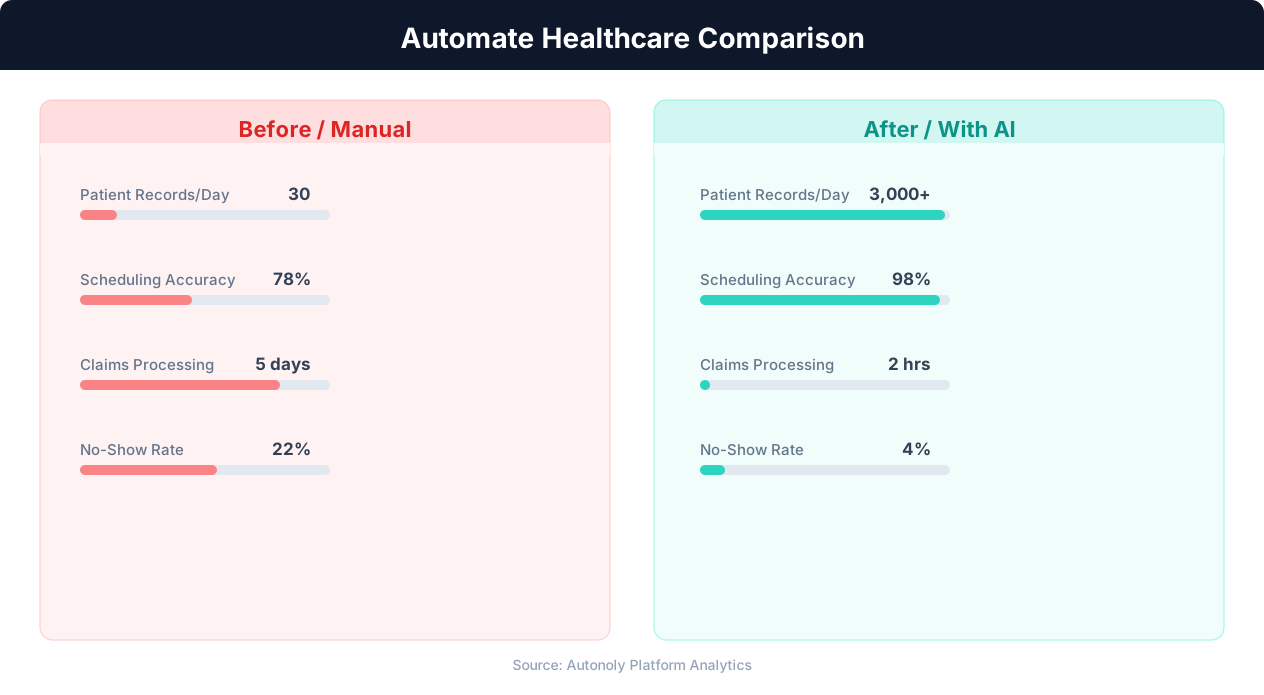
Patient wait time reduction with automated scheduling
Key Insight: Healthcare organizations spend 34% of total revenue on administrative tasks. Automation can reduce this overhead by up to 50% (McKinsey Healthcare Report).
How the AI Agent Does It
The agent reads your prescription tracking sheet from Google Sheets, calculates refill dates using fill date and days supply, and identifies prescriptions due within the reminder window. Personalized emails are generated and sent through Gmail with medication details and refill instructions. Send status is logged back to the spreadsheet. Multiple prescriptions for the same patient are consolidated into a single email for clarity.
Key Insight: Automated appointment scheduling reduces no-show rates by 38% through timely reminders and easy rescheduling options (MGMA Research).
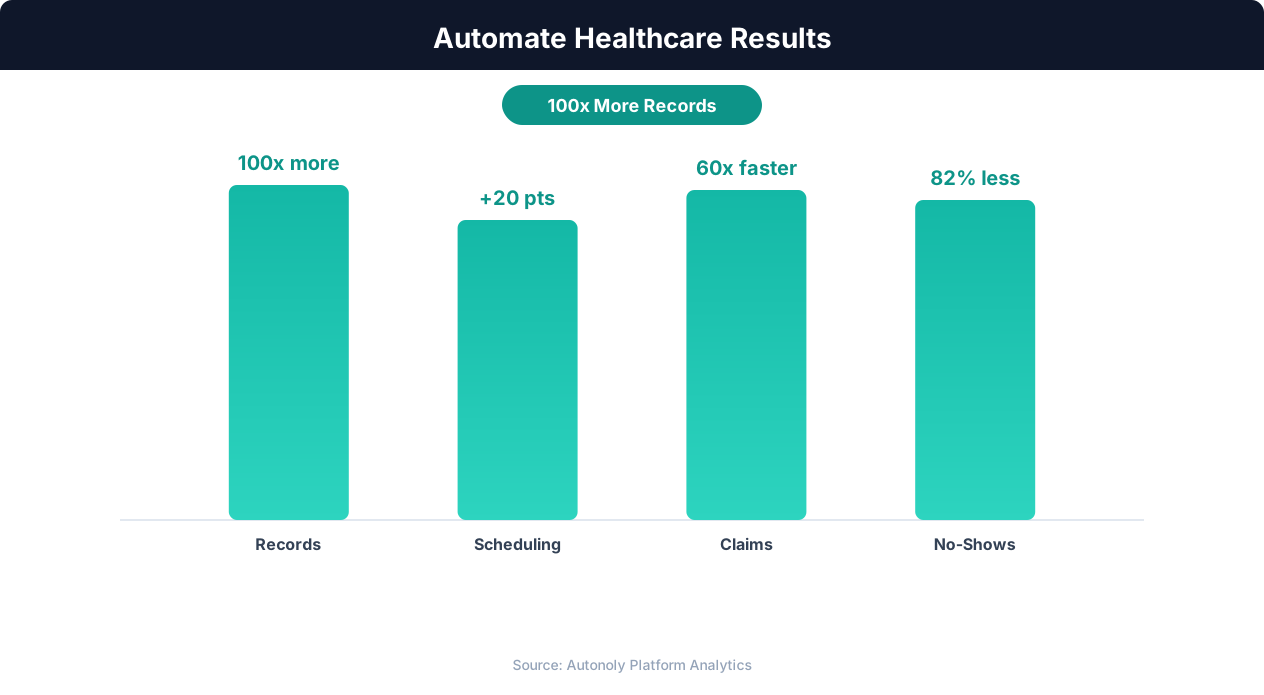
Cost savings from healthcare workflow automation
Key Insight: Providers using automated patient intake report 42% shorter wait times and 29% higher patient satisfaction scores (Advisory Board).
Scheduling and Automation
The workflow runs weekly, scanning all active prescriptions and sending reminders for those due within the upcoming window. The Visual Workflow Builder lets you choose the day and time — many practices run this Monday morning so patients can coordinate refills during the work week. Each weekly run is self-contained and handles volume efficiently — 500 prescriptions process in minutes.
Add Logic & Flow conditions to escalate critical medication reminders, handle controlled substance timing, and flag expiring prescriptions that need provider renewal. Generate monthly adherence reports with Data Processing for practice quality improvement initiatives. Check pricing to see how many automated runs are included in your plan.
Further Reading
Explore more about the tools and techniques used in this workflow: Automate Email Reports, Schedule Automated Workflows, Email Campaigns, Scheduled Execution.