

Why Automate Competitor Website Monitoring?
In competitive markets, being surprised by a competitor's pricing change, new feature announcement, or messaging shift puts you at a measurable disadvantage — which is why Harvard Business Review frames systematic competitive intelligence as a strategic capability rather than an occasional research task. Your sales team gets blindsided when a prospect mentions a competitor feature you did not know about — forcing them to improvise a response instead of delivering a prepared competitive positioning. Your marketing team misses the critical window to respond to a competitor's positioning change, allowing their narrative to take hold unchallenged. Your product team does not learn about competitive launches until weeks after they happen, making it impossible to adjust roadmap priorities in response to market moves. In fast-moving markets, competitive awareness that is days or weeks old is effectively no awareness at all.
The cost of competitive blind spots is both direct and compounding. A sales team that does not know a competitor just dropped their price by 20% keeps quoting the same rates and losing deals without understanding why. A marketing team that does not know a competitor launched a feature comparison page targeting your weaknesses keeps running the same messaging while the competitor chips away at your brand positioning. A product team that does not track competitive feature releases makes roadmap decisions in a vacuum, potentially investing months in capabilities that competitors already ship for free. McKinsey research shows that companies with systematic competitive intelligence programs grow revenue 20% faster than those relying on ad-hoc monitoring — the advantage of knowing what is happening in your market is substantial and well-documented.
The manual approach to competitive monitoring is unreliable by nature. Assigning someone to "check competitor websites regularly" results in inconsistent coverage that depends entirely on individual diligence. Key pages get missed, changes between checks go undetected, and the monitoring frequency drops during busy periods when competitive intelligence is often most needed. Even the most dedicated analyst cannot manually track five competitors across twenty pages each with the consistency that automation provides.
Automating competitor monitoring with Browser Automation gives you a daily intelligence feed that is comprehensive, consistent, and effortless. Every morning, you know exactly what your competitors changed on their websites — new pricing tiers, added features, updated messaging, new case studies, or blog posts. This real-time competitive intelligence lets you respond proactively rather than reactively, maintaining the strategic initiative that drives market leadership.
For product marketers, competitive analysts, and sales enablement teams, this automation replaces hours of manual website checking with a reliable, comprehensive monitoring system that never forgets to check and never misses a change. It transforms competitive intelligence from an occasional project into a continuous operational capability.
How the AI Agent Monitors Competitors
Autonoly's AI Agent Chat opens each competitor URL in a real Chromium browser through Browser Automation. It renders the full page — including JavaScript-loaded content, dynamic pricing tables, and interactive feature comparisons that static monitoring tools miss entirely.
The Data Extraction engine captures the page content in a structured format, focusing on the areas you care about — pricing numbers, feature lists, headline copy, call-to-action text, and any specific elements you define. This captured snapshot is compared against the previous day's snapshot to identify changes.
The comparison is intelligent, not just a raw text diff. The agent understands that a CSS color change or a footer copyright update is not significant, while a pricing change or a new feature bullet point is. The Data Processing engine filters out noise and surfaces only meaningful changes.
What Gets Monitored
Common monitoring targets include:
Pricing pages — Price changes, new tiers, modified feature lists per tier, discount offers
Feature pages — New features, removed features, changed descriptions, new categories
Homepage — Messaging changes, new taglines, updated value propositions, social proof updates
Blog — New posts, especially product announcements and feature releases
Job postings — New roles that signal strategic direction (hiring AI engineers, expanding to new markets)
The Visual Workflow Builder lets you monitor as many URLs as you need across as many competitors as you track. Each URL gets its own snapshot history, so changes are tracked independently.
Meaningful Change Detection
Not all website changes are worth alerting on. The agent uses Logic & Flow to filter changes by significance:
High priority: Pricing changes, new features, product announcements
Medium priority: Messaging updates, new case studies, team page changes
Low priority: Design tweaks, footer updates, minor copy edits
Configure alert thresholds so your team only gets notified about changes that matter. High-priority changes trigger immediate Slack alerts, while low-priority changes are batched into a weekly summary.
Historical Change Tracking
Beyond real-time alerts, every snapshot is logged to Google Sheets for historical analysis. Over months, you build a complete timeline of each competitor's pricing evolution, feature releases, and messaging shifts. This dataset is invaluable for quarterly competitive analysis reports and annual strategy planning.
Track patterns like how often competitors update pricing, whether they follow seasonal release cycles, or how quickly they respond to your own product announcements. This meta-analysis reveals competitive dynamics that individual change alerts cannot show.
Customizing Your Workflow
The Visual Workflow Builder lets you design monitoring workflows tailored to your competitive landscape. Define custom monitoring zones within each page — focus on the pricing table, the feature bullet points, or the hero headline while ignoring navigation, footers, and boilerplate that changes frequently but insignificantly. Set different monitoring frequencies for different competitors — check your primary competitor daily, secondary competitors weekly.
Add analysis steps that quantify changes. When a pricing change is detected, calculate the percentage increase or decrease and how it compares to your own pricing. When a new feature is announced, cross-reference it against your product roadmap to flag capabilities your competitor now has that you do not. This context transforms raw change detection into actionable competitive intelligence.
Sharing Intelligence
Route competitor alerts to the teams that need them. Pricing changes go to sales and product management. Feature announcements go to the product team. Messaging changes go to marketing. Use Logic & Flow to tag the right Slack channels and team members based on the type and significance of each change.
Integration Options
Build a complete competitive intelligence system by connecting monitoring with other workflows. Log all detected changes to Google Sheets for historical trend analysis across months and quarters. Post alerts to Slack channels organized by competitor or by change type. Sync competitive data to Notion for a team-wide competitive intelligence wiki or Airtable for structured competitive databases. Correlate competitor pricing changes with your own sales pipeline data to measure competitive impact. Visit the Integrations page for all supported connections, or browse the templates library for pre-built competitive monitoring workflows.
Use Cases
Product marketing teams tracking competitor positioning, pricing, and feature announcements for battlecard updates
Sales enablement teams maintaining current competitive intelligence that reps can reference in prospect conversations
Startup founders monitoring well-funded competitors for strategic moves that signal market direction
Pricing analysts tracking competitor pricing changes to optimize their own pricing strategy in response
Investment and M&A teams monitoring portfolio company competitors and target acquisition candidates
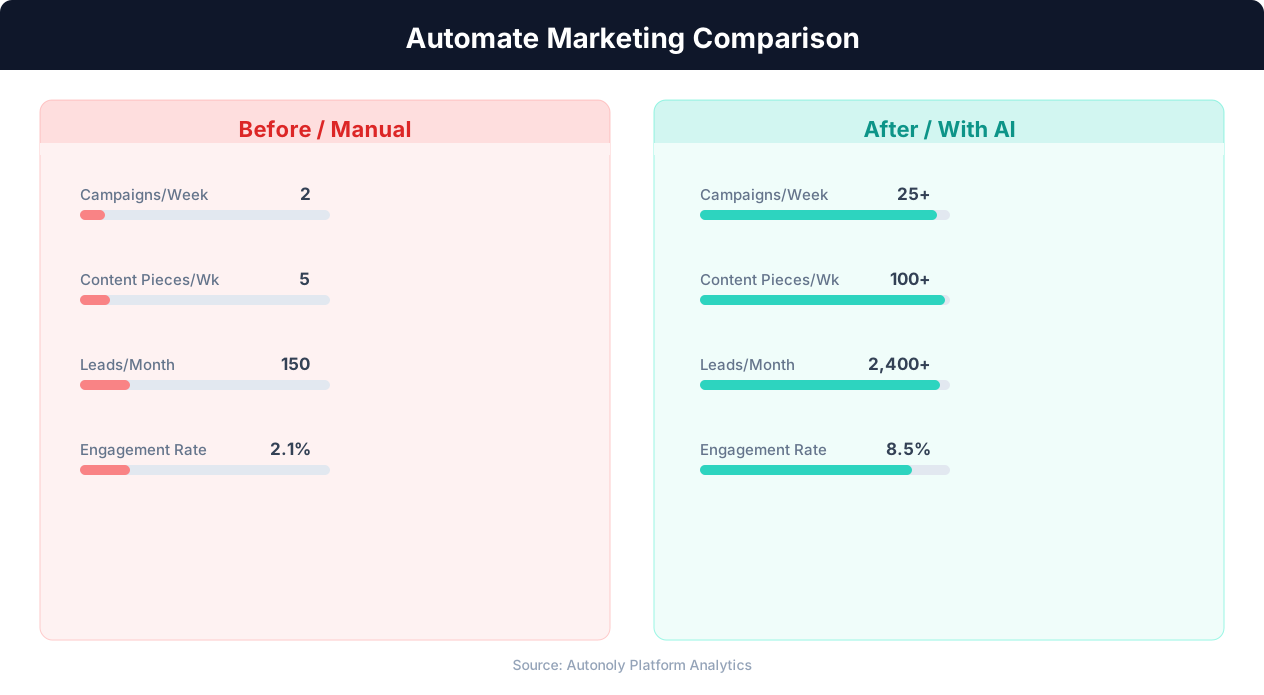
Content production speed in manual vs automated workflows
Key Insight: 63% of marketers say their biggest challenge is generating traffic and leads. Automation addresses this by running campaigns 24/7 without manual intervention (HubSpot State of Marketing).
How the AI Agent Does It
The agent opens each monitored URL in a real Chromium browser via Browser Automation, waits for the page to fully render (including JavaScript content), and extracts the relevant content sections using the Data Extraction engine. It compares the current content against the stored previous snapshot, identifies meaningful differences, and posts a summary to Slack. Full page snapshots are archived for historical tracking.
Handling Dynamic Content
Competitor websites often load content dynamically — pricing calculators, interactive feature tables, and gated content. Because the agent uses a real browser, it renders all of this content exactly as a visitor would see it. This catches changes that monitoring tools relying on HTTP requests would miss entirely.
Key Insight: Marketing teams using automation see 451% more qualified leads and a 14.5% increase in sales productivity (Annuitas Group).
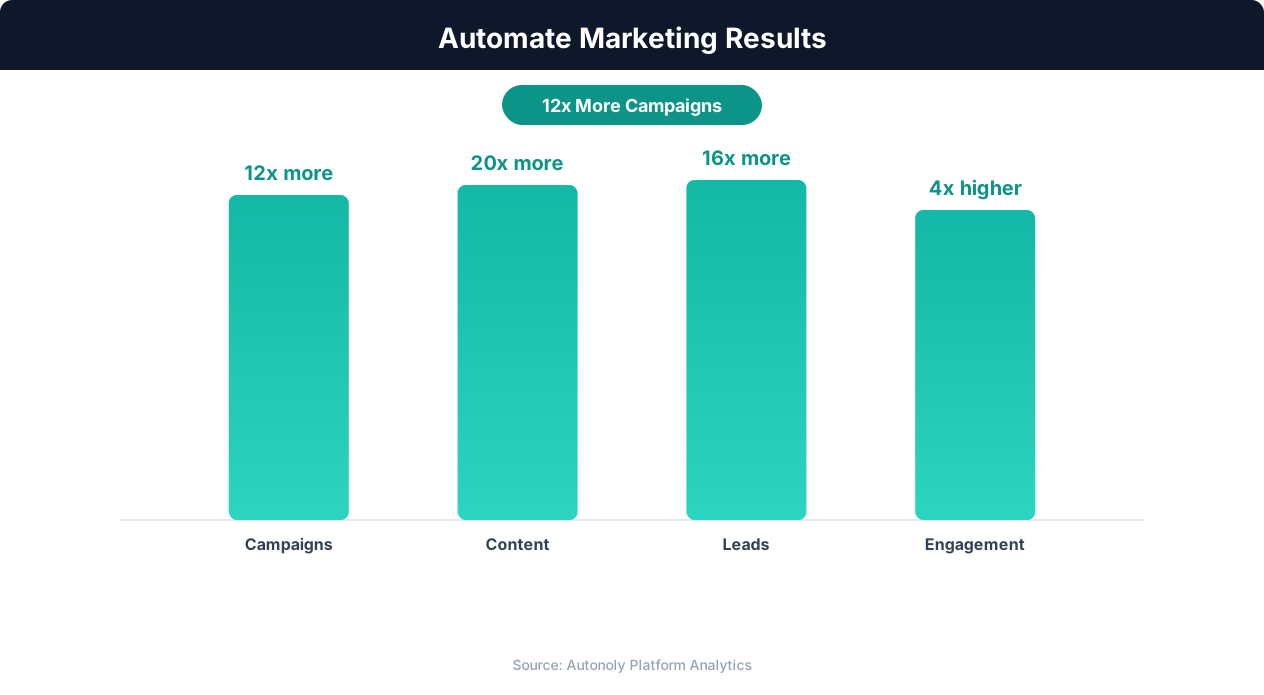
Marketing team productivity gains from automation
Key Insight: Companies automating their marketing analytics report 26% higher marketing ROI due to real-time performance tracking and rapid campaign optimization (Forrester).
Scheduling and Automation
Run this workflow daily using the Visual Workflow Builder. The agent checks all monitored competitor URLs and posts to Slack only when meaningful changes are detected. For fast-moving markets, increase monitoring to twice daily. Add Logic & Flow conditions to route different change types to different channels and to escalate critical changes like pricing drops to leadership. Log all changes to Google Sheets for long-term competitive trend analysis.
Further Reading
Explore more about the tools and techniques used in this workflow: Ecommerce Price Monitoring, Marketing Automation, Website Monitoring, Scheduled Execution.