


The Resume Screening Bottleneck
A single job posting can generate hundreds of applications within days. Recruiting teams spend an average of seven seconds scanning each resume, leading to inconsistent evaluations, missed qualified candidates, and significant time waste. Automating the initial screening pass with Autonoly ensures every resume gets a thorough, consistent review.
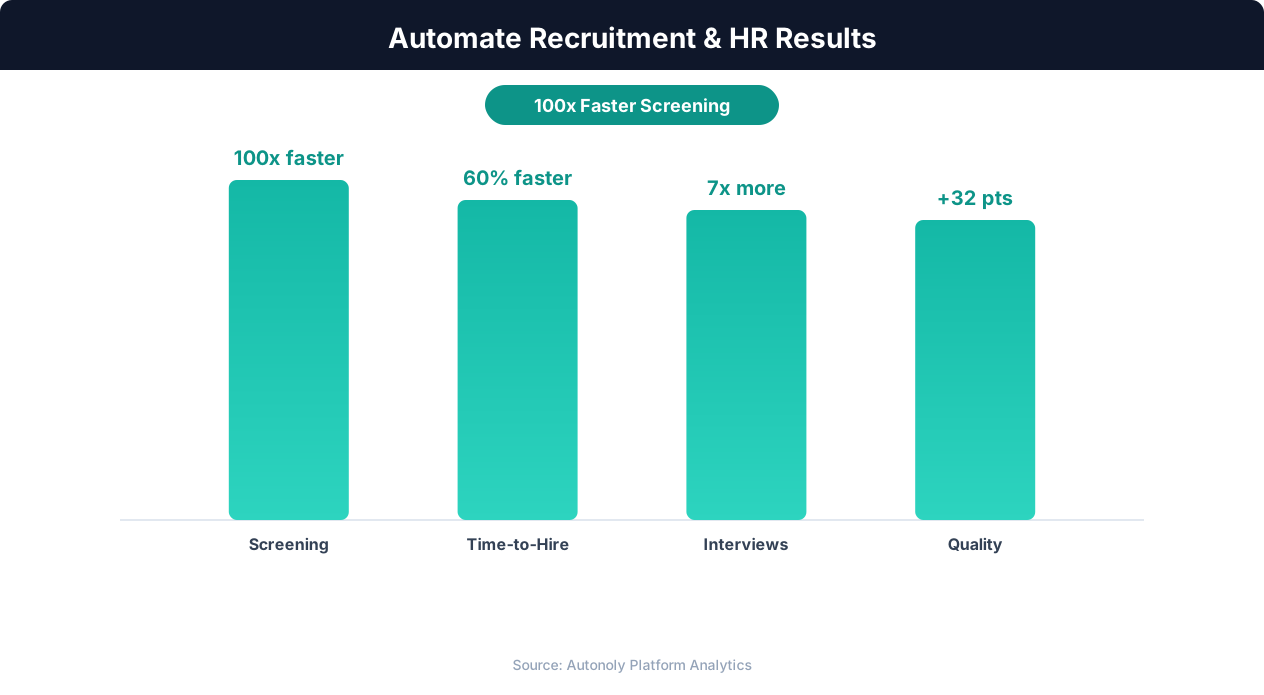
Quality of hire improvements from automated screening
Key Insight: Recruiters spend 23 hours per week on average sourcing candidates manually. Automation reduces this to 5 hours while expanding the candidate pool 4x (LinkedIn Talent Report).
How the Pipeline Works
The automation begins with resume collection. Autonoly's Browser Automation can monitor an email inbox, an ATS portal, or a cloud storage folder for new resume files. When a new resume arrives, the Data Extraction engine parses the document — PDF, DOCX, or plain text — and extracts structured fields: candidate name, email, phone, education history, work experience, skills, and certifications.
The AI Agent Chat powers the intelligence layer. You define your screening criteria in natural language: "Must have 3+ years of Python experience, a CS degree or equivalent, and at least one project involving machine learning." The agent evaluates each resume against these criteria and assigns a score.
Key Insight: Companies using recruitment automation report 67% lower cost-per-hire and 31% lower turnover in the first year due to better candidate matching (Bersin by Deloitte).
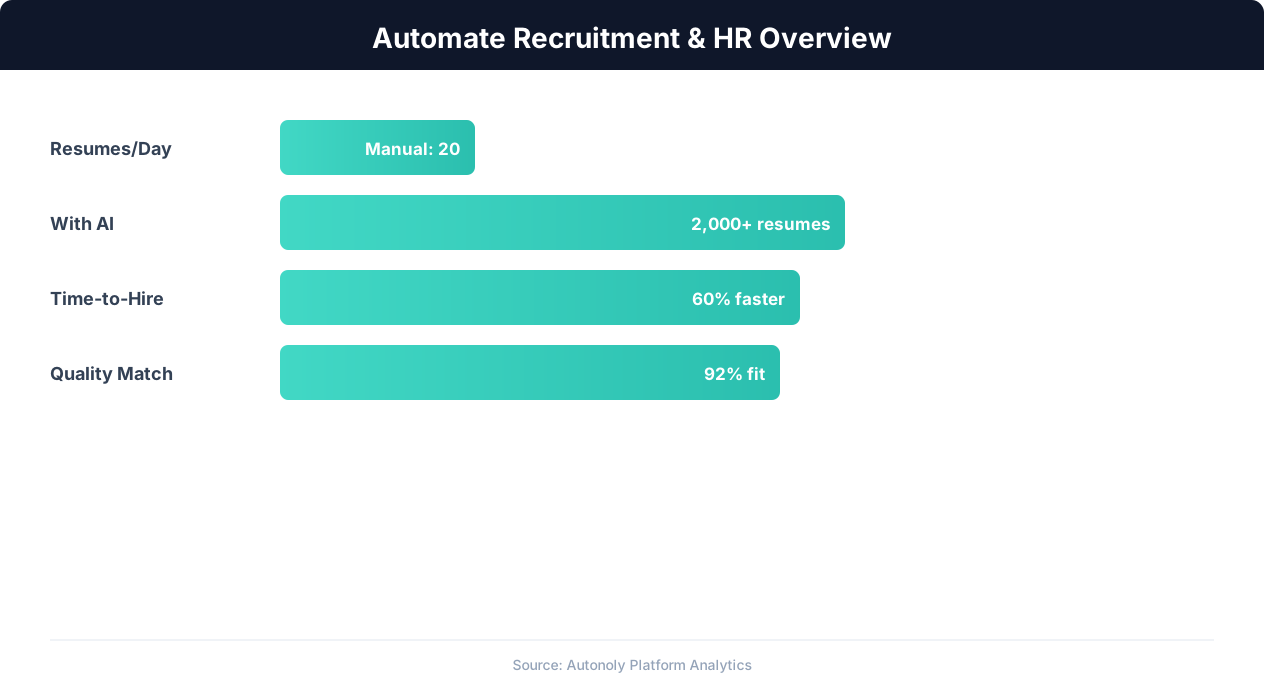
Recruitment automation impact on hiring metrics
Scoring and Ranking
Each criterion is weighted according to your priorities. Must-have requirements are treated as pass/fail gates, while nice-to-have qualifications add bonus points. The scoring algorithm is transparent — your team can see exactly why a candidate received a given score by reviewing the extracted fields and matched criteria.
The Data Processing pipeline normalizes job titles (e.g., "Software Dev" and "Software Developer" are treated as equivalent), standardizes date formats, and calculates total years of experience across multiple roles.
Output and Integration
The ranked shortlist is written to a Google Sheets spreadsheet with columns for candidate name, contact info, overall score, and individual criterion scores. Color-coded conditional formatting highlights top candidates in green and disqualified applicants in red.
From there, integrate with your existing tools using the Integrations hub. Push top candidates to Greenhouse, Lever, or Workday. Send a Slack notification to the hiring manager with the day's shortlist. Export the data for your weekly recruiting standup.
Customizing the Pipeline
The Visual Workflow Builder lets you customize every step. Add a screening question extraction step if your applications include cover letters or form responses. Insert a duplicate detection node to flag candidates who have applied before. Route candidates to different reviewers based on the role they applied for.
Weighting Criteria for Different Roles
Each requisition may prioritize different skills. The scoring weights are fully configurable per role — a backend engineering position might weight systems design experience heavily, while a data science role prioritizes statistical modeling and Python proficiency. Save different scoring templates in the Visual Workflow Builder and assign them to each requisition.
Handling Non-Standard Resume Formats
Candidates submit resumes in a wide variety of formats and layouts. The Data Extraction engine handles multi-column layouts, creative designs, and portfolios alongside traditional chronological resumes. For scanned documents or image-based PDFs, built-in OCR converts the content to text before extraction begins.
Pre-built resume screening workflows are available in our templates library. Modify them to match your company's unique requirements in minutes.
Reducing Bias in Screening
Automated screening applies the same criteria to every resume, eliminating the unconscious bias that can creep into manual reviews. You control the criteria, and the system applies them uniformly. Audit logs show exactly how each candidate was evaluated, supporting your compliance and DEI initiatives.
Key Insight: Automated job posting syndication to 50+ platforms increases qualified applicant volume by 88% compared to manual posting on individual boards (iCIMS Research).
Getting Started
Visit our pricing page to find a plan that supports your application volume. Most recruiting teams start with the mid-tier plan, which provides enough execution minutes for daily screening of 50-100 resumes. For an overview of the underlying data extraction technology, see the web scraping glossary. To connect this pipeline with your broader recruiting stack, explore the full Integrations library.
Real-World Screening Scenarios
A Series C startup receiving 200 applications per week for a Senior Backend Engineer role configures the screening pipeline with three must-have criteria (5+ years of backend experience, proficiency in Go or Rust, and distributed systems experience) and two nice-to-haves (open source contributions and prior startup experience). Each morning, the pipeline processes overnight applications and delivers a ranked shortlist of 10-15 candidates to the hiring manager's Google Sheet. Candidates scoring above 80 also trigger a Slack message to the recruiter, who begins outreach the same day. The entire screening step that previously took a recruiter four hours per day now runs in the background in under 30 minutes.
A large enterprise HR team uses the pipeline to screen across multiple open requisitions simultaneously. Each requisition has its own criteria set, and incoming resumes are routed to the correct scoring workflow based on which job posting the applicant responded to. The consolidated output sheet gives the talent acquisition lead a single view of all open roles, top candidates, and pipeline health metrics.
Manual Screening vs. Automated Pipelines
Traditional resume screening relies on recruiters skimming each document for keywords and making snap judgments. Research shows that manual screeners spend an average of seven seconds per resume, leading to high rates of false negatives — qualified candidates who are overlooked because their resume layout did not surface the right keywords quickly enough. Automated screening reads the full document, extracts structured data from every section, and evaluates each criterion individually. The result is more thorough, more consistent, and dramatically faster than any manual process.
The time savings compound as application volume increases. Screening 50 resumes manually takes about two hours. Screening 500 takes a full workday. With Autonoly, processing time scales linearly with minimal human involvement — 500 resumes complete in roughly the same wall-clock time as 50, since the bottleneck is document parsing rather than human attention.
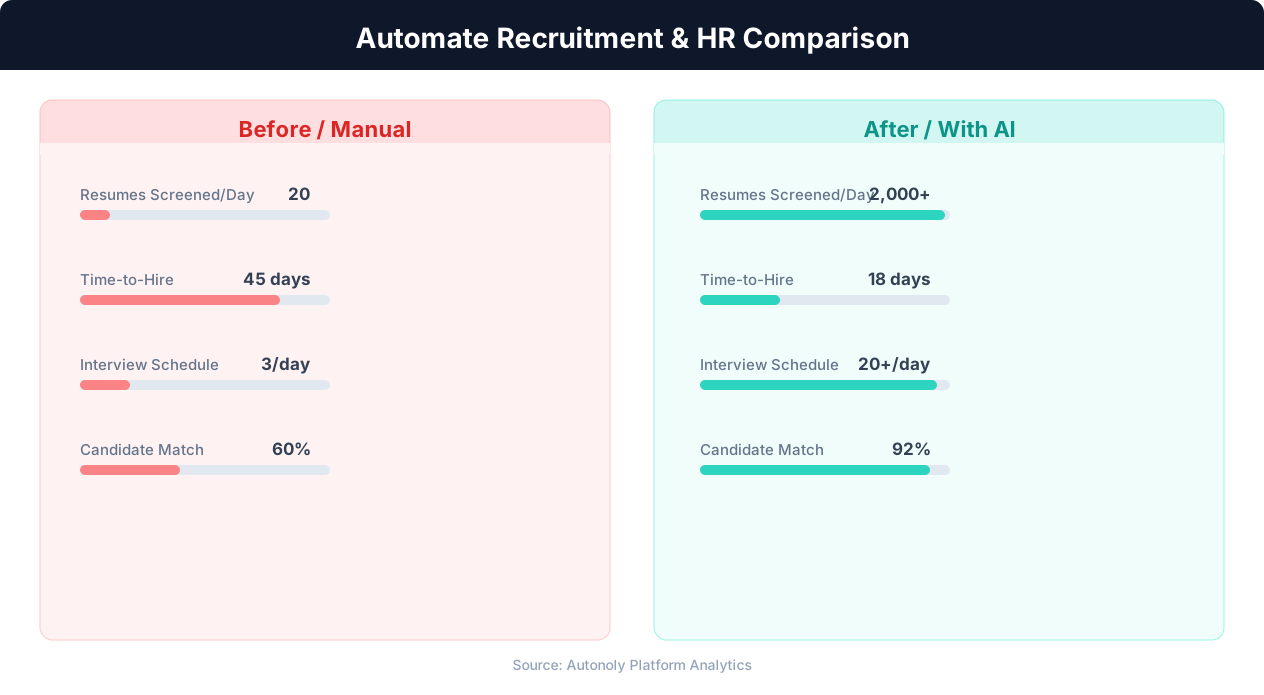
Time-to-hire comparison for manual vs automated recruitment
Key Insight: Automated resume screening reduces time-to-hire by 43% while improving candidate quality by surfacing qualified applicants human reviewers missed (SHRM Research).
Extending the Pipeline with Autonoly Features
Use Logic & Flow to add branching logic after scoring. Route candidates who pass all must-have criteria but score below 70 overall to a "maybe" tab for secondary review. Automatically send rejection emails to candidates who fail critical criteria using a Gmail integration node. Push top candidates directly into Greenhouse or Lever via the Integrations hub. Schedule the pipeline to run multiple times per day during peak hiring periods so that top candidates receive outreach within hours of applying, giving your team a competitive edge in a tight talent market.
Further Reading
Explore more about the tools and techniques used in this workflow: Recruiting Automation, Ai Workflow Automation, Ai Content, Pdf Ocr.