

Why Track Whale Transactions?
In cryptocurrency markets, large holders (whales) can move prices significantly with a single transaction. When a whale moves thousands of Bitcoin from a cold wallet to an exchange, it often signals upcoming selling pressure. When large amounts flow from exchanges to private wallets, it suggests accumulation and reduced selling supply. Tracking these movements gives traders and investors an informational edge that is difficult to replicate with traditional analysis alone.
Whale watching has become a crucial component of crypto market analysis. Dedicated platforms like Whale Alert track large transactions, but their notifications are noisy and lack customization. Autonoly lets you build sophisticated whale monitoring with custom thresholds, multi-chain tracking, and contextual analysis that goes beyond raw transaction data.
Etherscan is the primary block explorer for the Ethereum network, providing transparent access to every on-chain transaction. However, manually checking specific wallets, filtering by transaction size, and correlating movements across multiple addresses is impractical at any meaningful scale. Automating this surveillance produces a structured dataset where patterns become visible.
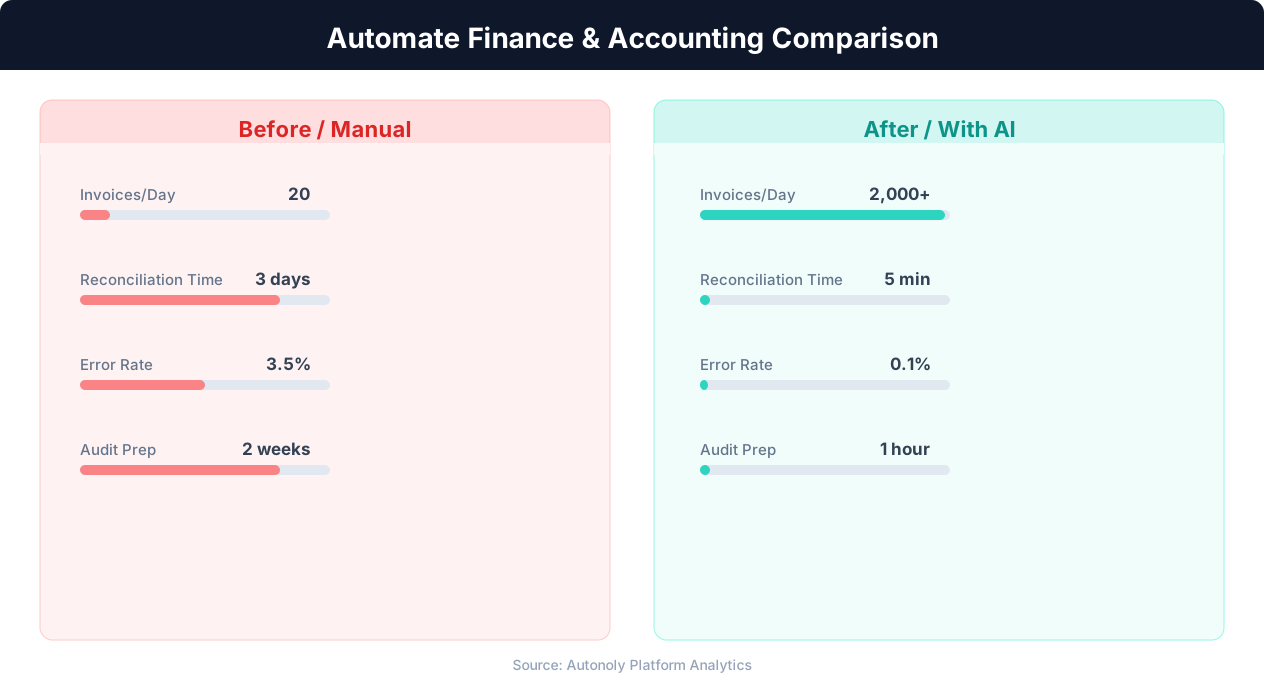
Error reduction in automated vs manual financial processes
Key Insight: Manual invoice processing costs $15-$40 per invoice. Automation reduces this to $1-$3, a savings of up to 92% per transaction (Ardent Partners).
How Autonoly Monitors Whale Activity
The AI Agent Chat lets you describe your tracking needs naturally. You might say "track Bitcoin transactions over 100 BTC and Ethereum transactions over 1,000 ETH, alert me on Slack when they involve known exchange wallets." The agent builds the monitoring pipeline.
Using Browser Automation, the agent navigates whale tracking websites (Whale Alert, Etherscan, Blockchain.com) and blockchain explorers. The full Playwright browser handles the dynamic, real-time interfaces these platforms use. The Data Extraction engine pulls transaction hashes, amounts, sender and receiver addresses, known entity labels, and timestamps.
Contextual Analysis
Raw transaction data is just the starting point. Autonoly's Data Processing feature enriches each transaction with context that matters for market analysis. Exchange identification reveals whether funds are moving to or from known exchange wallets — a critical signal for buy/sell pressure. Wallet labeling identifies whether addresses belong to known entities — investment funds, DeFi protocols, exchange hot wallets, or government seizure addresses.
Historical pattern analysis compares the current transaction against the wallet's previous activity. A whale moving 1,000 BTC to an exchange for the first time in six months is more significant than a wallet that makes similar transfers weekly. The agent can also cross-reference transactions with price data to identify potential correlations.
Multi-Chain Coverage
The crypto ecosystem spans multiple blockchains. Autonoly can monitor Bitcoin transactions via Blockchain.com, Ethereum and ERC-20 token transfers via Etherscan, stablecoin movements (USDT, USDC) across chains, and any other blockchain with a publicly accessible explorer. The Visual Workflow Builder lets you create multi-chain monitoring pipelines that aggregate whale activity across networks.
Alert Configuration
The Logic & Flow feature enables nuanced alert rules. You can set different thresholds for different cryptocurrencies, prioritize exchange-bound transactions over wallet-to-wallet transfers, create escalating alerts (bigger transactions get sent to more channels), and filter out known routine transfers from entities like exchange hot wallet management.
Alerts are sent to Slack or Discord with formatted messages showing the transaction amount, cryptocurrency, sender and receiver labels, transaction hash with explorer link, and the potential market significance.
Building a Whale Activity Database
All tracked transactions are logged to an Excel spreadsheet or Google Sheets, building a historical database of whale activity. Over time, this data reveals patterns — which wallets consistently precede market moves, which exchanges see the most whale inflow during rallies, and how whale behavior differs across market cycles.
The SSH & Terminal feature enables running custom Python analysis on this historical data — correlating whale movements with subsequent price action, building predictive models, or generating research reports using pandas and NumPy.
Real-Time Alerts
For time-sensitive whale movements, pair the Excel logging with a Slack alert. When a transaction exceeding $10M hits a monitored wallet, get an immediate Slack notification with transaction details and classification. The historical data lives in Excel for analysis, while Slack provides real-time awareness. The Logic & Flow feature lets you set different thresholds for different tokens — $1M minimum for ETH, $500K for altcoins — and escalate based on transaction size.
You can also save data to Google Sheets for collaborative analysis with your trading team. Browse our templates library for pre-built crypto monitoring workflows. The Integrations page covers all available destinations. For background on automated data collection, see our guide on web scraping. Visit pricing for plan details.
Reading On-Chain Data Directly
While whale-tracking dashboards are convenient, the most authoritative source is the blockchain itself. Public ledgers like Bitcoin and Ethereum expose transaction data through node JSON-RPC interfaces and explorer APIs, which return signed, verifiable records rather than a third party's curated feed. For a robust pipeline, the dashboard view is useful for human-readable entity labels (which exchange a wallet belongs to), while the on-chain API is the canonical source for amounts and addresses. Combining the two gives you both the context and the cryptographic certainty that a transfer actually occurred as reported.
Interpreting Whale Signals Responsibly
Whale-watching is alluring, but the data is easy to misread, so a few caveats keep your analysis honest. Large transfers are frequently internal — an exchange moving funds between its own cold and hot wallets, or a custodian rebalancing — and labeling these as "buy pressure" produces false signals; that is precisely why entity labeling matters. Mixers, bridges, and wrapped-asset contracts further obscure the true origin and destination of funds. Crucially, acting on whale movements touches market-conduct rules: regulators such as the U.S. SEC treat trading on material non-public information as unlawful, and on-chain surveillance should inform legitimate research rather than any attempt to front-run or manipulate. Treating whale alerts as one input among many — never a standalone trade trigger — keeps your strategy both smarter and compliant.
Further Reading
Explore more about the tools and techniques used in this workflow: Web Scraping Best Practices, Schedule Automated Workflows, Website Monitoring, Scheduled Execution.